People often see the finished cake sitting on the table and think it is simply a lovely decorated dessert. I reality many celebration cakes are much more complex then they appear. Behind the smooth buttercrem, fondant decorations or elegant designs, there is often a lot of planning, structure, and technical skills involved.
Over the years while working as a chef and creating celebration cakes on the side, I have learned that cake decorating is not just about creativity. It also requires problem-solving on the spot, a lot of patience and sometimes a little bit of engeneering. Every cake presents its own challenges, weather it is creating the right sponge texture, balancing flavours, or making sure the structure of the cake can support multiple layers or tiers.
This blog explores the proces behind creating a structured celebration cake and the technical thinking that goes into making it sucessful.
One of the most challenging cakes I worked on recently was a tall two tier birthday cake that required multiple sponge layers, rich fillings with a coat of ganache and a clen fondant finish. While the final design looked relatively simple, the process behind building the cake required careful planning and technical attention.
The first step in creating a cake like this is selecting the right sponge. The customer requested a chocolate biscuit cake as the base and a chocolate sponge cake for the second tier. A good cake sponge needs to be soft and moist but also strong enough to support the weight of fillings and decorations. If the sponge is too delicate, the layers can collapse or become unstable once the cake is stacked. Thankfully I have the perfect chocolate sponge cake recipe for just that.
I used a chocolate sponge recipe that produces a rich flavour while still holding its structure. Oil-based sponges tend to stay moist for longer and work well when cakes need to be prepared in advance. After baking, the sponge layers were cooled and levelled to create a flat, even base for stacking.
Next came the filling. Fillings are important not only for flavour but also for stability. Soft fillings such as cream or mousse may taste excellent but can make cakes unstable if they are used on their own or if you intend to decorate it with fondant and maybe some sugar paste. In this case, a chocolate Swiss meringue buttercream was used because it provided both flavour and structural support.
Once the sponge and filling layers were stacked, the cake was placed in the fridge to firm up before decoration. This stage is important because it allows the buttercream to stabilise, making it easier to achieve a smooth finish later.
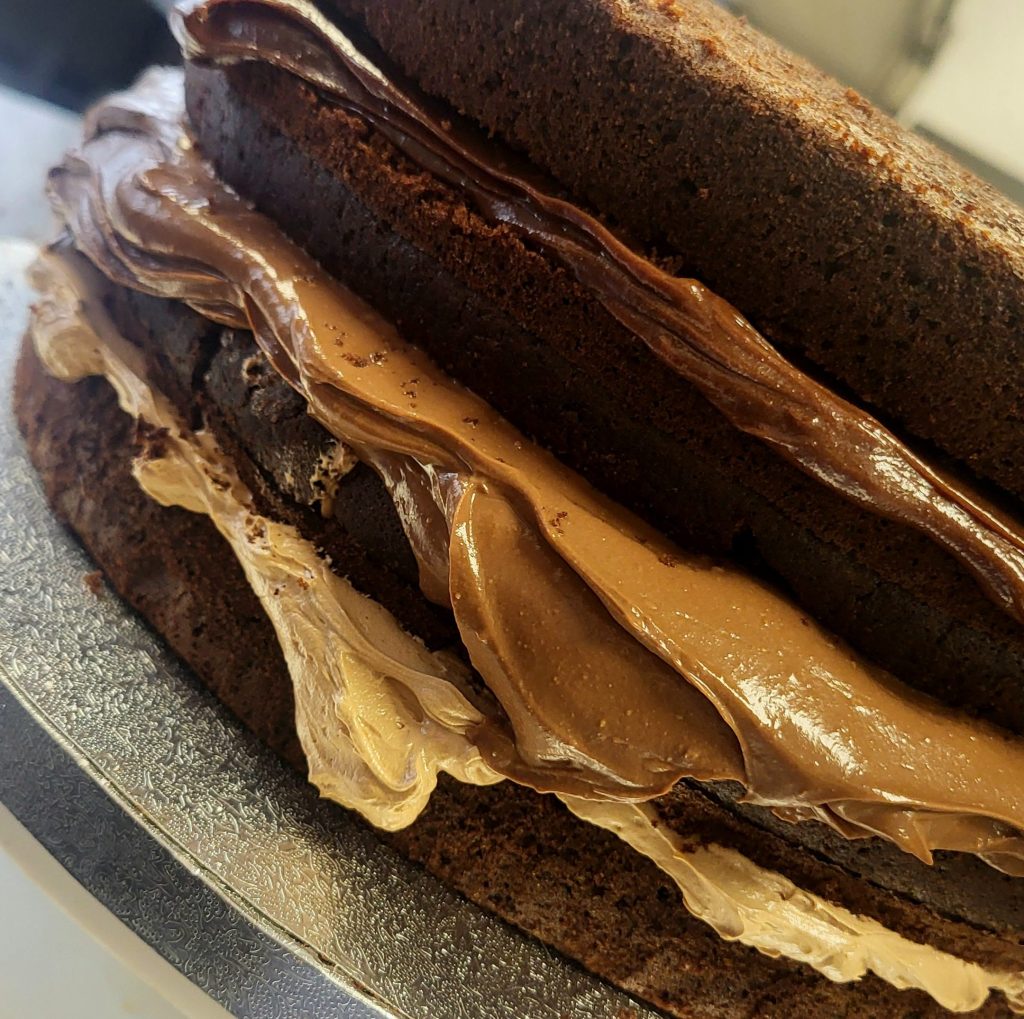
The next step was applying the crumb coat. This is a thin layer of buttercream that seals in loose crumbs before the final decoration is applied. Although it may seem like a small step, it is essential for achieving a clean and professional finish.
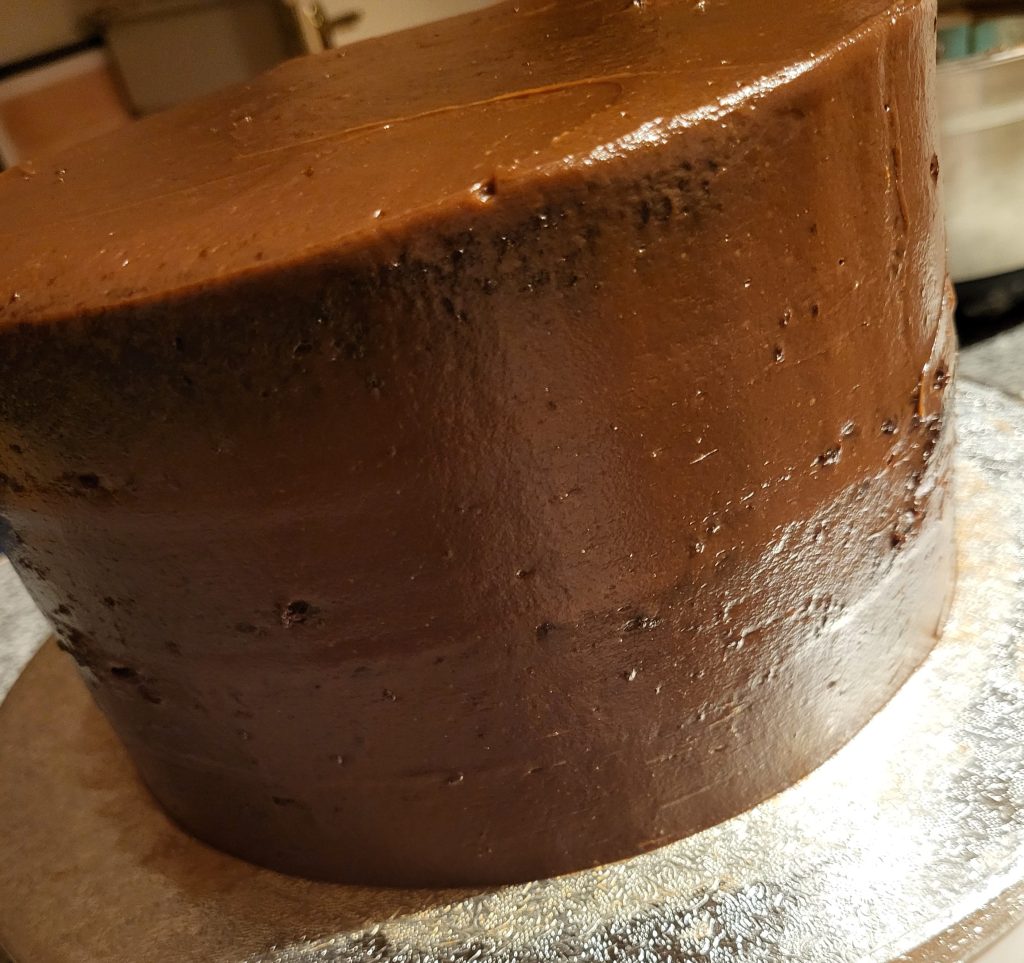
Because the cake was quite tall, internal supports were also necessary. Cake dowels were inserted into the sponge cake to prevent it from sinking under its own weight and the decorations later. One dowel was inserted through both cakes to make sure they will stay together and not slide when moved around. This structural support acts almost like the framework of a building, allowing the cake to hold its shape even when it is moved or transported.
Finally, the cake was covered with fondant icing to create a smooth finish, after which the final decorative elements were added. By this stage, the majority of the technical work had already been completed, and the decorations added the finishing touch.
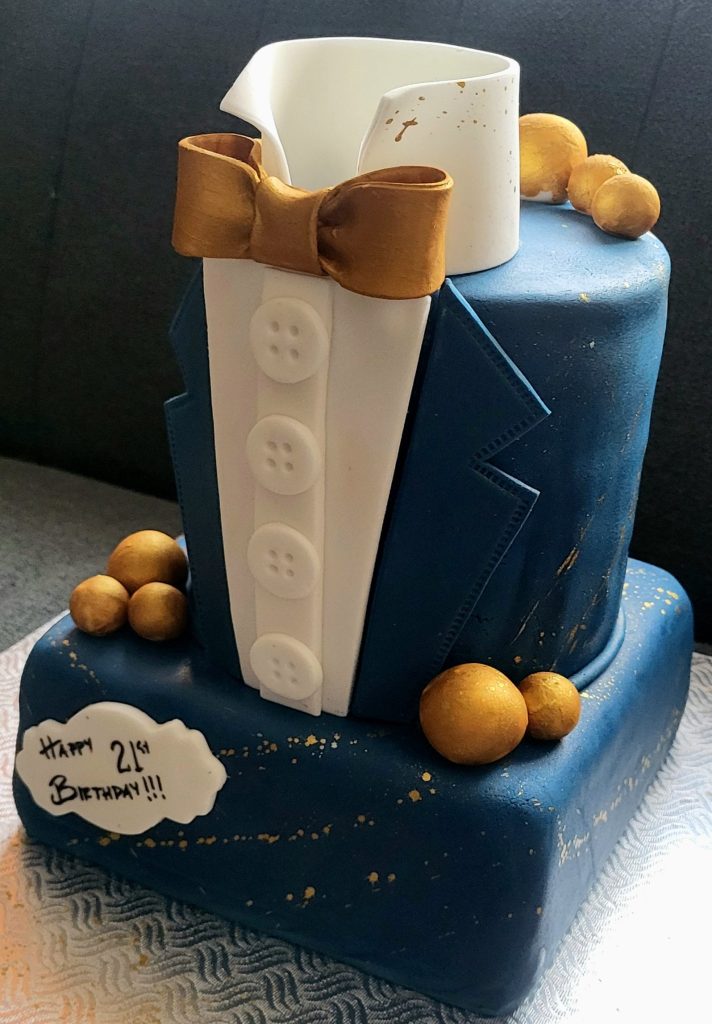
This process demonstrates how cake decorating involves much more than visual design. It requires an understanding of ingredients, structure, timing and technique, simple yet complex.
Working on cakes like this has helped me develop both technical skills and confidence in my abilities as a chef and cake maker. The beginnings were tough at times but over time I have learned that successful cake decorating relies heavily on preparation and understanding how different components interact with each other.
One of the biggest lessons I have learned is the importance of structure. Some cakes come together easily, while others turn into small disasters. Early in my experience with celebration cakes, I underestimated how important internal supports and stable fillings were. But you must be prepared to fail as it prepares you for success. As I gained more experience, I realised that good cake design begins with the foundation rather than the decoration.
Through practice and experimentation, I have become more confident in selecting recipes, adjusting techniques and troubleshooting potential problems before they happen. Each cake presents a new challenge, but these challenges are also opportunities to improve and refine my skills.
This process has strengthened my understanding of both baking and presentation, allowing me to approach cake decorating with a more professional and structured mindset.
Creating celebration cakes involves far more than decoration. It combines creativity with technical knowledge, careful planning and attention to detail. From choosing the right sponge to building internal supports, every step contributes to the final result.
I have come to appreciate how much skill and problem-solving goes into producing a successful cake. Each project provides new lessons that help develop both confidence and technique.
As I continue to build my blog, I hope to share some of these experiences, highlighting the process behind the cakes as well as the finished designs. For me, cake decorating is not only about creativity but also about constantly learning, improving and pushing my skills and having fun along the way.
More cake creations and bakes can be found on my Facebook Cakes By Alex and Instagram at Cakez.by.alex.
 Beyond Cake Art
Leave a comment